I’ve been building products for about six months now. All of it self-directed: no course, no structure, nobody checking my work. When I came across the Google Cloud Gen AI Academy, what appealed wasn’t really the syllabus. It was the idea of doing something structured for once, seeing how other people build, and getting properly hands-on with cloud, which I’d never touched.
There’s an Ideathon at the end of it, which honestly was one of the main draws. And a certificate, which might be useful proof of something later. I have plenty of other work on. But curious and career-minded is a fair description of why I signed up.
Here’s what the week was actually like.
The first hurdle wasn’t technical
It was working out what this thing was.
The platform was new to me. The dashboard was new. For the first while I was mostly trying to understand what I’d signed up for: which parts were mandatory, which was the competition, what the deadlines meant. Once that clicked, the rest was straightforward: read the material for the three tracks, work through them, do the quizzes.
I mention it because I suspect a lot of people drop out at exactly this point, before doing anything at all. The confusion at the start isn’t a sign you won’t manage the rest.
The genuinely scary part was billing
Not the code. The credit card.
You hear stories about people getting hit with a few hundred dollars because they left something running or configured something wrong. Handing card details to a system I didn’t understand yet was easily the most uncomfortable moment of the week.
What settled it was setting a budget alert before running anything, a specific amount, so I’d get an email long before it became a problem. Worth knowing that an alert emails you, it doesn’t cap anything. It buys you awareness, not a ceiling. That was enough for peace of mind.
For reference: all three tracks came to roughly ₹100 in total.
I’m still a bit wary, and I think that’s reasonable. What worries me isn’t the amount. It’s costs accumulating without me noticing. If you’re new, that’s the real risk, and the alert takes two minutes to set up.
Agent one: I’d been doing this already, without knowing its name
The first track builds a small assistant that recommends things from a coffee shop menu. The technique is called RAG, or retrieval-augmented generation.
The idea is that you don’t let the AI answer from whatever it happens to know. You send it only the information relevant to that question, and you instruct it to answer from that alone rather than from whatever it absorbed in training.
Worth being precise here, because I nearly overstated it: this makes the model strongly prefer your data. It isn’t a wall. A grounded model can still blend in things it learned elsewhere, which is exactly why you test it.
Which is what we already do in the product I work on. I just didn’t know it had a name.
That was a good feeling, and a slightly strange one: finding out the thing you worked out by instinct is a documented technique with a body of work behind it.
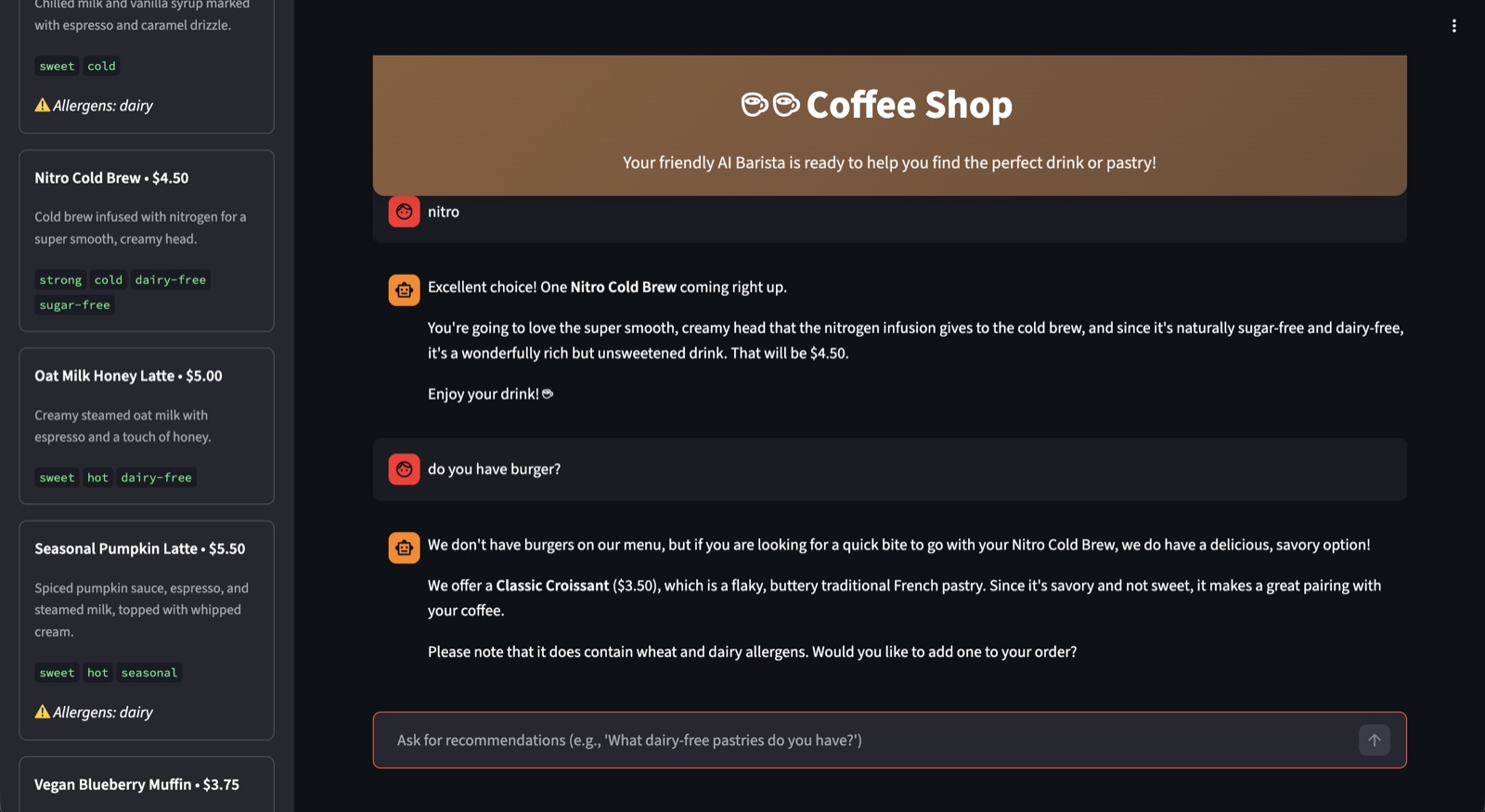
The test is simple. I asked the assistant for a burger. It said it doesn’t have burgers, and offered a croissant instead, noting the allergens. Nothing invented.
Agent two: talking to a database in plain English
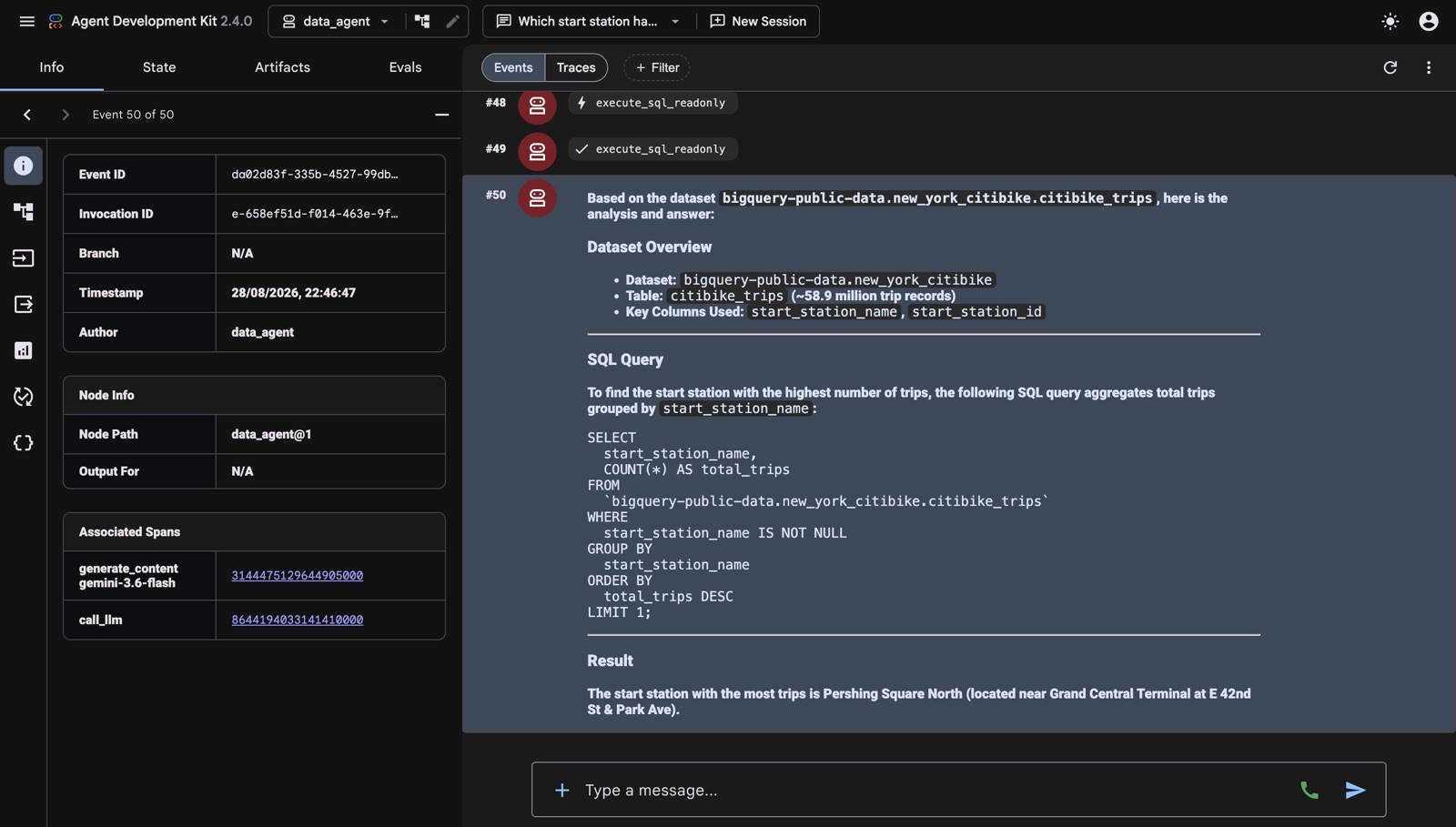
The second track connects to a public dataset of about 59 million New York bike trips. You ask a question in normal language. The AI works out what the data looks like, writes the SQL itself, runs it, gets the rows back, then turns those rows into a sentence you can read.
What surprised me was how much of it was looking rather than writing. It listed the tables, read the structure, ran small exploratory queries to check what was actually inside the columns, and only then wrote the real query. It has never seen your database. It has to go and find out, every time.
For a business, that removes real friction. Normally you’d need a technical person to write that query, and you’d wait, sometimes days, for an answer that might have been useful on the day you asked.
Agent three: the one that asked permission
The third track is the one that changed how I think about this.
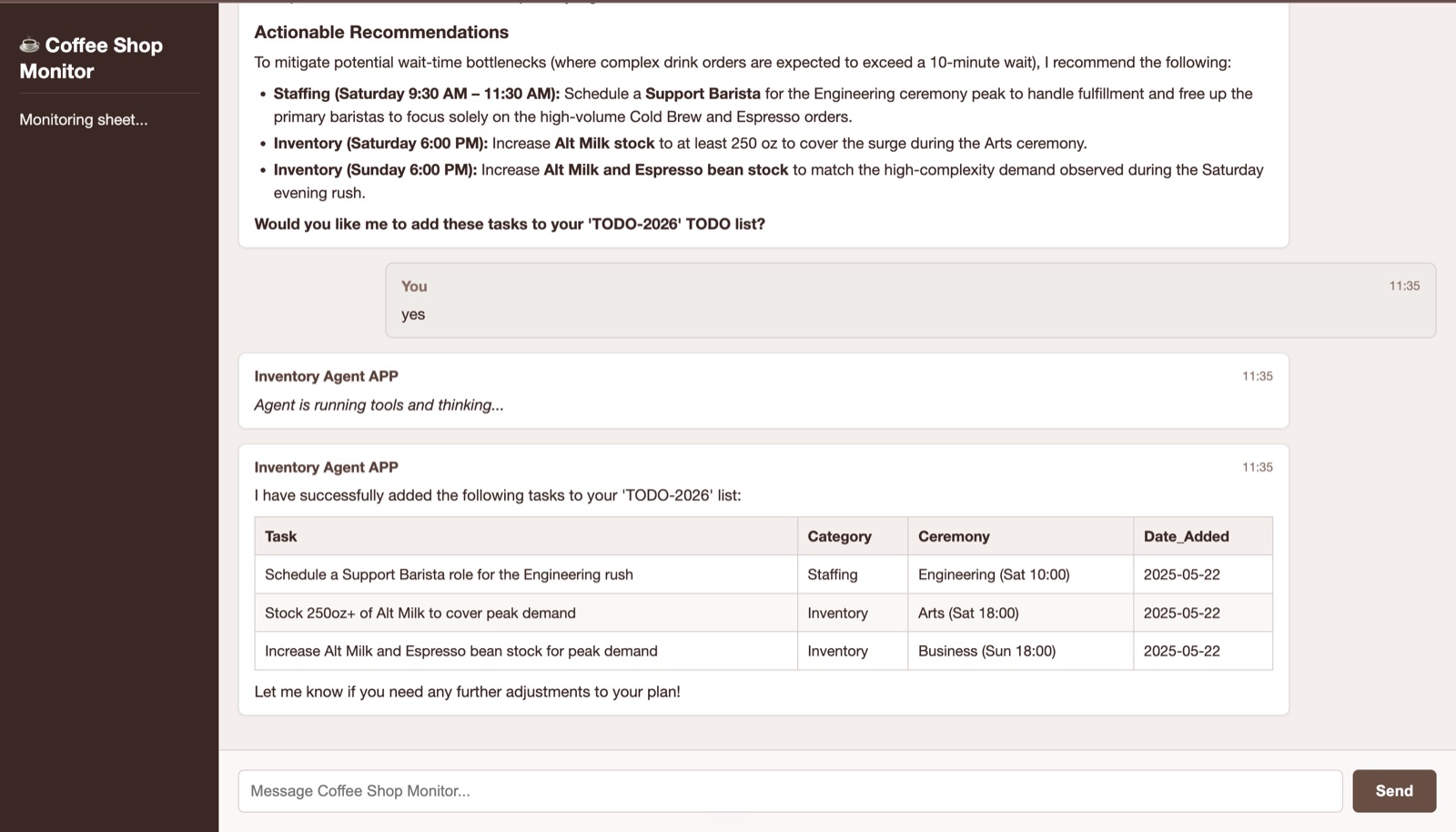
It reads last year’s till data from a spreadsheet, writes its own Python to find the busy periods, and works out where the bottlenecks will be. It correctly identified that during one rush the problem wasn’t the number of cashiers. It was drink preparation, because the spike was in complex orders. It recommended a second person on drinks for a specific two-hour window.
Then it stopped and asked whether I wanted those tasks added to my to-do list. It waited. I said yes. It created a new tab in my spreadsheet and wrote them in.
That pause is the whole thing. An agent that answers questions is a search box. An agent that can change your data is a different category, and asking first is the right default for that category.
It also gave me the most useful mistake of the week. It stamped each task with a date, and the date was more than a year off. Nobody had given it a clock, so it produced something plausible. That’s exactly what the burger test was checking for, except much harder to spot, because a wrong date sitting in a spreadsheet cell looks perfectly reasonable.
The rule I’ve taken from it: don’t let a model supply a fact it has no way of knowing. Dates, prices, stock levels: pass them in, or give it a tool to fetch them.
So what is an agent?
Before this week I’d have said it’s just AI doing something. I’d now say it’s AI narrowed to a job and given tools, and the interesting ones are allowed to act, not just look things up.
All three of mine used tools. Only the third could change something in the real world, and that’s the one that felt genuinely different to build.
AI as a supercharger, not a replacement
The thing I keep thinking about is how this fits with systems that already exist.
AI isn’t supposed to be the answer to everything. What struck me is that in these setups it doesn’t replace the existing system. It plugs into it. The database stays exactly where it is. The AI sits alongside and opens up things you couldn’t do with that data before.
Like a supercharger on an engine that was already running. I might be wrong about that, but it’s how it looks from where I’m standing.
The best thing I saw this week wasn’t mine
A friend, comfortable with computers but whose work has nothing to do with code, built himself a calculator for working out which type of wire to use for different jobs.
He built it with the free version of Claude. No code written by him at all. He worked out on his own that the model needed a baseline, so he prepared a document of requirements and scenarios first, then handed that over. All front-end: no login, no database, nothing complicated.
He came to me because he wanted it as a link he could open on any device. He didn’t have the vocabulary for what he was asking, but he knew exactly what he wanted. We deployed it, and he uses it now.
That’s the part I find genuinely exciting, and it isn’t one of my three.
What I took from it
Build the thing, even when it seems dumb. That’s the rule I’ve landed on for myself.
If it doesn’t work, I’ve lost an evening and learned how the pieces fit. If it does, I’ve got something that saves me time or money, plus the experience of shipping and deploying, which is a different skill from making it run on my own machine. The only real risk is rebuilding something that already exists, and honestly, so what.
For a non-coder, the cost of building has come down to almost nothing if you know where to look. The free tools are more than enough to start. My own stack runs to about ₹2,000 a month, and nearly every piece of infrastructure has a free tier, enough to deploy, launch, and let your first few hundred people use it before deciding whether it’s worth paying to scale.
That’s a genuinely new situation, and I don’t think enough people have noticed.
What’s next
The Ideathon. I have the problem statement and haven’t opened it properly yet.
One thing that stuck: watching real cloud builds run made me wonder how I’d manage costs on something that depended on them. Someone experienced can probably predict next month’s bill. As a beginner you can’t, and you’re doing it with a card that has a real limit attached. Worth thinking about before it’s a problem.
Three agents, about ₹100, and a much better sense of what these systems can and can’t be trusted with.
Now the actual competition. Hopefully I win it.